When I started my journey with InterSystems IRIS, especially in Interoperability, one of the initial and common questions I had was: how can I run something on an interval or schedule? In this topic, I want to share two simple classes that address this issue. I'm surprised that some similar classes are not located somewhere in EnsLib. Or maybe I didn't search well? Anyway, this topic is not meant to be complex work, just a couple of snippets for beginners.

1 0
0 69

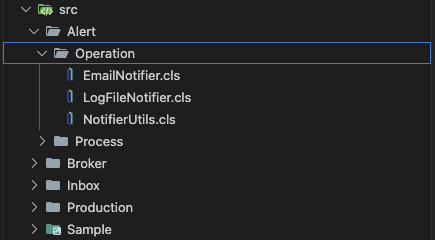
Over time, while I was working with Interoperability on the IRIS Data Platform, I developed rules for organizing a project code into packages and classes. That is what is called a Naming Convention, usually. In this topic, I want to organize and share these rules. I hope it can be helpful for somebody.

7 4
4 116

I have a class with a projection that creates some persistent classes (chunks) and a non-persistent "Daemon" class that I want to have running in the background, doing some processing. The daemon needs to look at the "chunk" classes, and I want it to be simple to start the daemon -- I am currently calling the daemon's start method at the end of the CreateProjection method.

2 8
0 97

An extension “extends” or enhances a FHIR resource or a data element in a custom way. The extension can be added to the root of a resource, such as “Patient.ethnicity” in US Core profile, and they can be added to individual elements such as HumanName, Address or Identifier.

Did you know that you can also add an extension to a primitive data type?

Primitives usually store a single item and are the most basic element in FHIR. For example: "Keren", false, 1234, 12/08/2024 etc.

For example, the patient resources might look like this:

6 1
1 285

The Good Old Days

The %Library.DynamicObject class has been in IRIS since before it became IRIS. If you have been using it since the Cache days, you may want to brush up on some of its changes.

In Cache 2018, the %Get method only had one argument. It was the key to retrieving from the JSON, meaning that if your JSON object called myObj, it would look like the following:

8 3
3 287