If the class of the message extends Ens.Request you can send whatever you want. To validate the class of the message you only need $CLASSNAME method.
- Log in to post comments
If the class of the message extends Ens.Request you can send whatever you want. To validate the class of the message you only need $CLASSNAME method.
Three hurrahs for the Community Managers!!!
And this is the reason because I love the Community! ❤
Hi @Vishal Pallerla!
%iFind index cover different type of searchs, you can find here all the conditions. For your example the search LIKE '%example%' is equivalent to:
%ID %FIND search_index(IndexTitulo, '*example*')And it should return exactly the same number of matches.
Thank you very much @Juan Mota Sanchez!
Thank you @Robert Cemper !
Why don't you execute a SQL query over the message table?
Can I see the Association Context?
.png)
Hi @Yone Moreno ! Could you paste the metadata from your DICOM message, something like this:
.png)
Maybe you CommandField value isn't a C-STORE operation.
Thank you @Robert Cemper !
Check the image:
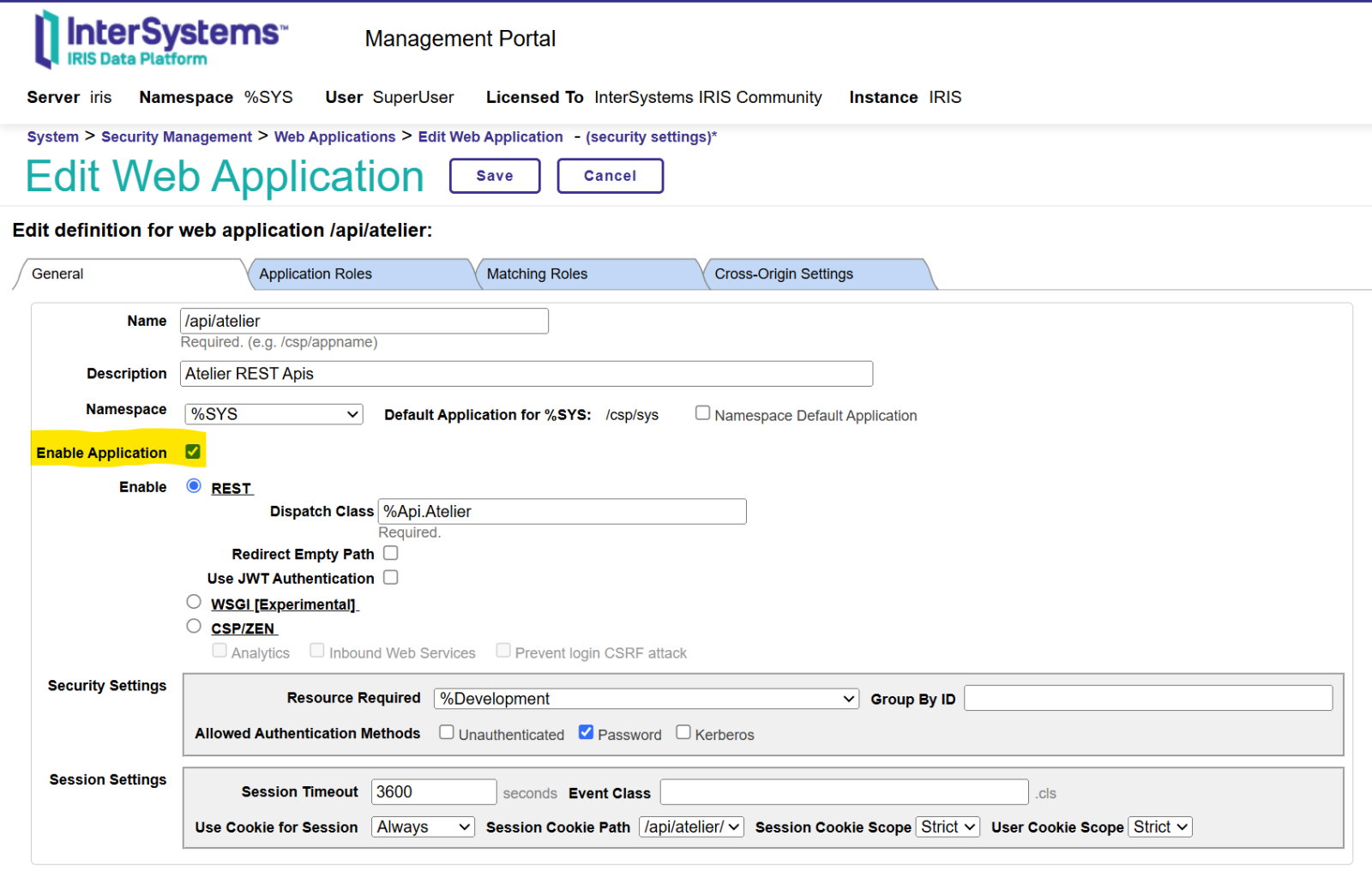
Is api/atelier web application enabled?
You have to write your object as String into a Ens.StreamContainer and sent it to a EnsLib.File.PassthroughOperation Business Operation.
Check the configuration of api/atelier web application. It should be enable to connect through port 80:
https://community.intersystems.com/post/having-trouble-connecting-your-…
Try modifying the default action RESTRICT for CASCADE like this:
ALTER TABLE table DROP COLUMN column CASCADE %DELDATAhttps://docs.intersystems.com/iris20251/csp/docbook/DocBook.UI.Page.cls…
Well, I guess that the reason for the storage of DICOM images out of the database is the huge size of these images.
I was working for a time for a VNA provider and many studies composed by hundred of DICOM images usually weighted more than 4 and 5 GB.
Have you tried changing the column names avoiding whitespaces and "-" character?
Maybe my example can help you:
https://community.intersystems.com/post/diagnosis-searching-similaritie…
I wrote an article 2 years ago, maybe you can use it:
https://community.intersystems.com/post/predictions-integrated-ml-and-i…
I've another about time series predictions, tell me if you are interested.
You can see here what is each version:
https://docs.intersystems.com/iris20251/csp/docbook/Doc.View.cls?KEY=PA…
Good point @Steve Pisani ! Thank you!
Do you get any error from de Ollama console? Maybe you can try directly with Mistral docker image, bypassing the Ollama image:
Do you have IRIS configured in the same network that Ollama?
networks:
- iris-llm2-network
Have you tried the notation: file:///yourfolder/yoursubfolder/yourfile.xsd?
Thank you for your comments @Steven Hobbs !
Thank you @Brett Saviano!
Maybe I'm missing something. This is my container:
ARG IMAGE=containers.intersystems.com/intersystems/iris-community:latest-preview
.png)
But I can't see the button.