Supply Chain - Supply Chain Orchestrator (SCO)Contestant
Before finding the best solution for Supply Chain, we need to understand what Supply Chain is. Well, regardless of the language used, the term is known by the name already mentioned. For your information, the translation in Brazilian Portuguese is "Cadeia de Suprimentos" (Supply Chain), sometimes also called "Cadeia Logística" (Logistics Chain), but we will not dwell on the nomenclature, but rather on the meaning.
Basically, it's the process from obtaining the raw material (in this example, obtaining latex (milky sap) from a rubber tree, which is the basis for creating rubber) to manufacturing the rubber tire, which is purchased by the end customer to replace a worn-out tire on their vehicle, or by the car factory, which installs it on a new car.
But from the tree to the wheel of my car is a long way, isn't it? The answer is yes. This involves several operations such as purchasing other inputs for rubber manufacturing, extracting the material with manual labor, the logistics of delivering this latex to its processor, as well as the entire process from point A to point B. And this usually involves several companies and people, and keeping this entire machine running, aiming for a better product, with the best price and the most effective and efficient delivery, is hard work.
In summary, the Supply Chain encompasses every imaginable step in the process, from removal/manufacturing/logistics/storage to the delivery of the product or service to the end customer.
A good supply chain system, when properly used and managed, aims to execute all these processes in the best way possible in order to deliver something at a lower cost, with greater efficiency, higher quality, and that primarily satisfies everyone involved, especially the customer.
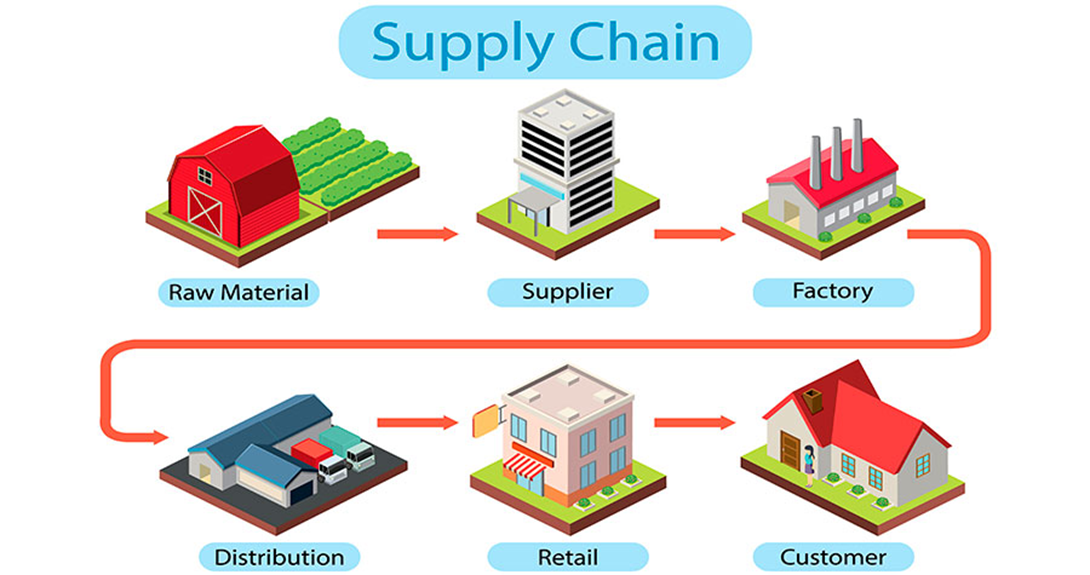
We commonly divide the Supply Chain into 5 stages or processes (Here we may disagree, some literature presents 4 stages/processes – I will continue with five):
- Planning: The foundation of everything;
- Supply: Maintains the "fuel" that powers the process;
- Manufacturing: Getting "hands dirty," doing;
- Delivery: Getting it delivered;
- Returns: Nobody expects to need to return or resolve something, but if it happens, it has to be done well too.
With this in mind, I believe we can look at the tool itself, which will support this entire chain or this entire mechanism, in its operation. The tool we have at InterSystems to support this wonderful, yet complex (without help) world is the “Supply Chain Orchestrator”, or SCO (as we will refer to it here). Based on its development in IRIS (https://www.intersystems.com/products/intersystems-iris/), it includes some specific accelerators and frameworks for supply chains.
It was designed so that managers of these supply chains, as well as their teams, have an in-depth view from their own company, reaching all branches of this process (as seen above in the explanation about Supply Chain). All this data is entered into a specific data model, called CDM (Canonical Data Model).
Far beyond traditional Supply Chain tools, SCO uses this data organized in an intelligent mesh, which, when fully integrated, allows the exploration of data combined with business intelligence, and with a "touch" of machine learning (Artificial Intelligence), making it much more agile and easy to apply.
SCO has pre-configured analytical blocks with a very high range of very specific points about the supply chain, such as sales orders, shipments, purchase orders, inventory and others. And here we have the "trick", all are easily configurable, without the need for programming (if I may say so, a relief), facilitating the development of KPIs (Key Performance Indicators) based on business results.
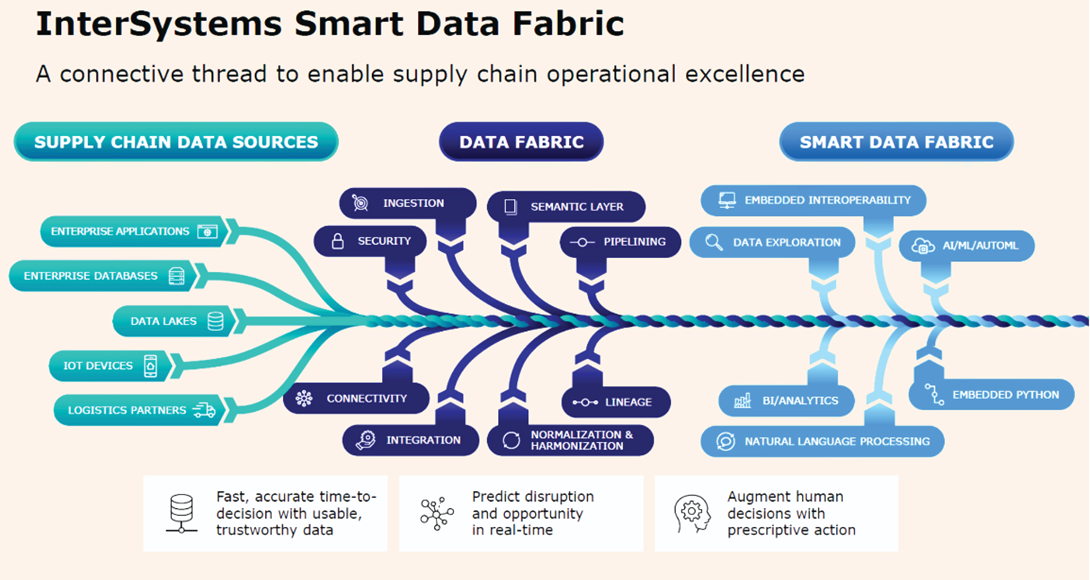
Okay, but how does this actually work?
The biggest difference between InterSystems' SCO and other Supply Chain Management systems is that the data is stored multidimensionally, supporting both object-oriented and relational models. This means that the data can be read in any format, whether vertical or horizontal, and is saved only once, thus avoiding duplication.
Sources: https://www.intersystems.com/uk/bloor-intersystems-incontext-uk-edition-pdf https://www.intersystems.com/products/supply-chain-orchestrator/ https://www.intersystems.com/products/intersystems-iris/