Hola amigo! 😊 Cómo estás hoy,

I would like to share a small part of my learnings from my first ever official project: POS/EDC machine integration with our billing system. This was an exciting challenge where I got hands-on experience working with APIs and vendors.

How does a Payment Machine actually work?

It's simple, start by initiating/creating a transaction, then retrieve its payment status.

Here, initiate/create refers to POST method and Retrieve refers to GET.

1 0
2 115

For developers building external applications, especially those using familiar technologies like C#, ODBC (Open Database Connectivity) is a crucial, standardized bridge to any relational database, including InterSystems IRIS. While InterSystems offers its own native ADO.NET provider, the ODBC driver is often the most straightforward path for integration with generic database tools and frameworks.

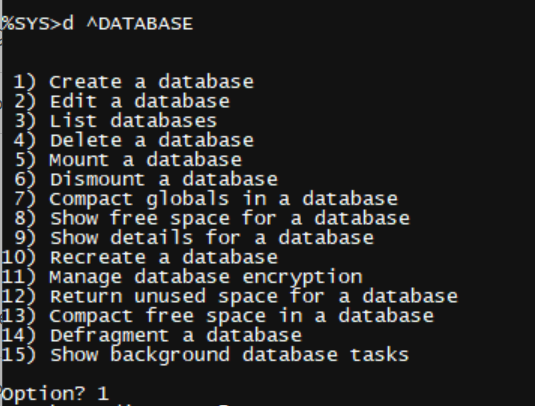
Here is a step-by-step guide to getting your C# application connected to an IRIS instance using the ODBC driver, focusing on DSN-less connection string.

Step 1: Install the InterSystems IRIS ODBC Driver

The InterSystems ODBC driver is installed by default when you install InterSystems IRIS on a Windows machine.

  • If IRIS is on the same machine: The driver is already present.
  • If IRIS is on a remote server: You must download and install the standalone ODBC client driver package for your client operating system (Windows, Linux, or macOS) and bitness (32-bit or 64-bit) from WRC website if you're a client or by installing Client components and copying ODBC driver.

Once installed, you can verify its presence in the ODBC Data Source Administrator tool on Windows (look for the InterSystems IRIS ODBC35 driver).

3 0
1 97

Modern data architectures utilize real-time data capture, transformation, movement, and loading solutions to build data lakes, analytical warehouses, and big data repositories. It enables the analysis of data from various sources without impacting the operations that use them. To achieve this, establishing a continuous, scalable, elastic, and robust data flow is essential. The most prevalent method for that is through the CDC (Change Data Capture) technique. CDC monitors for small data set production, automatically captures this data, and delivers it to one or more recipients, including analytical data repositories. The major benefit is the elimination of the D+1 delay in analysis, as data is detected at the source as soon as it is produced, and later is replicated to the destination.

This article will demonstrate the two most common data sources for CDC scenarios, both as a source and a destination. For the data source (origin), we will explore the CDC in SQL databases and CSV files. For the data destination, we will use a columnar database (a typical high-performance analytical database scenario) and a Kafka topic (a standard approach for streaming data to the cloud and/or to multiple real-time data consumers).

Overview

This article will provide a sample for the following interoperability scenario:

10 0
4 207
Article
· Nov 16, 2025 2m read
Network Debugging for Beginners - 2

In my previous article, I structured network communications
in these 3 possible layers, and covered the last

  • Client <---> Transport
  • Server <---> Transport
  • Client <---> Server

In fact, you have the most control over the last one.
The IRIS side as a server is yours and under your full control.
Up to now, the Transport layer was assumed to be as passive as a bare wire.

6 0
2 93

FastJsonSchema: High-Performance JSON Validation in IRIS

Validating JSON data against JSON Schema is a common requirement for modern applications. FastJsonSchema brings this capability natively to InterSystems IRIS, combining speed, simplicity, and full schema compliance.

Unlike traditional validation approaches, FastJsonSchema generates native ObjectScript code from your JSON Schemas and compiles it directly to iris object code, enabling idiomatic performance without relying on external libraries or runtimes.

1 1
0 80

As a developer who uses Cache as DB for a couple of projects, I'm using REST API's every time, knowing how to consume a resource from REST API, in my opinion, it's crucial to know how to consume external REST Api's using %Net.HttpRequest because it enables integration with modern web applications and services, and it's a crucial skill for a backend developer who loves and uses Cache as a DB.

What and who is %Net.HttpRequest

3 0
1 105

When I started my journey with InterSystems IRIS, especially in Interoperability, one of the initial and common questions I had was: how can I run something on an interval or schedule? In this topic, I want to share two simple classes that address this issue. I'm surprised that some similar classes are not located somewhere in EnsLib. Or maybe I didn't search well? Anyway, this topic is not meant to be complex work, just a couple of snippets for beginners.

1 0
0 111

Window functions in InterSystems IRIS let you perform powerful analytics — like running totals, rankings, and moving averages — directly in SQL.
They operate over a "window" of rows related to the current row, without collapsing results like GROUP BY.
This means you can write cleaner, faster, and more maintainable queries — no loops, no joins, no temp tables.

In this article let's understand the mechanics of window functions by addressing some common data analisys tasks.

7 0
3 299
Article
· Nov 6, 2025 2m read
About exporting mapped globals

InterSystems FAQ rubric

When exporting using the Export() method of the %Library.Global class, if the export format (fourth argument: OutputFormat) is set to 7, "Block format/Caché block format (%GOF)," mapped globals cannot be exported (only globals in the default global database of the namespace are exported). To export mapped globals in "Block format/Caché block format (%GOF)," specify the database directory to which you want to map them in the first parameter of %Library.Global.Export().

An example of execution is shown below.

2 0
0 110

Over time, while I was working with Interoperability on the IRIS Data Platform, I developed rules for organizing a project code into packages and classes. That is what is called a Naming Convention, usually. In this topic, I want to organize and share these rules. I hope it can be helpful for somebody.

7 4
4 159
Article
· Oct 28, 2025 3m read
IRIS Home Assistant Add-On (HAOS)

InterSystems IRIS Community Edition HAOS Add-On

Run InterSystems IRIS inside of Home Assistant, as an add-on. Before you dismiss this article possibly under the guise that this is just a gimmick, Id like you to step back and take a look at how easy it is to launch IRIS based applications using this platform. If you look at Open Exchange, you will see dozens of dozens of applications worthy of launching while they are basically hung out to dry as gitware, and launchable if you want to get into a laptop battle with containerd or Docker. With a simple git repo, and a specification, you can now build your app on IRIS, and make it launchable through a marketplace with limited hassle to your end users. Run it along side Ollama and the LLM/LAM implementations, expose anything in IRIS as a sensor or expose an endpoint for interaction in your IRIS app to interact with anything you've connected to HAOS. Wanna restart an IRIS production with a flick of a physical switch or Assisted AI? You can do it with this add-on, or your own, right alongside the home automation hackers.

5 0
1 119
Article
· Oct 22, 2025 2m read
Tips on handling Large data

Hello community,

I wanted to share my experience about working on Large Data projects. Over the years, I have had the opportunity to handle massive patient data, payor data and transactional logs while working in an hospital industry. I have had the chance to build huge reports which had to be written using advanced logics fetching data across multiple tables whose indexing was not helping me write efficient code.

Here is what I have learned about managing large data efficiently.

Choosing the right data access method.

As we all here in the community are aware of, IRIS provides multiple ways to access data. Choosing the right method, depends on the requirement.

  • Direct Global Access: Fastest for bulk read/write operations. For example, if i have to traverse through indexes and fetch patient data, I can loop through the globals to process millions of records. This will save a lot of time.
Set ToDate=+H
Set FromDate=+$H-1 For  Set FromDate=$O(^PatientD("Date",FromDate)) Quit:FromDate>ToDate  Do
. Set PatId="" For  Set PatId=$Order(^PatientD("Date",FromDate,PatID)) Quit:PatId=""  Do
. . Write $Get(^PatientD("Date",FromDate,PatID)),!
  • Using SQL: Useful for reporting or analytical requirements, though slower for huge data sets.

3 6
1 174

Introduction

Businesses often use in-memory databases or key-value stores (caching layers) when applications require extremely high performance. However, in-memory databases incur a high total cost of ownership and have hard scalability limits, incurring reliability problems and restart delays when memory limits are exceeded. In-memory key-value stores share these limitations and introduce architectural complexity and network latency as well.

This article explains why InterSystems IRIS™ data platform is a superior alternative to in-memory databases and key-value stores for highperformance SQL and NoSQL applications.

Taking Performance and Efficiency to the Next Level

InterSystems IRIS is the only persistent database that can match or beat the performance of in-memory databases and caching layers for concurrent data ingestion and analytics processing. It can process incoming transactions, persist the data to disk, and index it for analytics in under one microsecond on commercially available hardware without introducing network latency.

The superior ingest performance of InterSystems IRIS results in part from its multi-dimensional data engine, which allows efficient and compact storage in a rich data structure. Using an efficient, multi-dimensional data model with sparse storage techniques instead of two-dimensional tables, random data access and updates are accomplished with very high performance, fewer resources and less disk capacity. It also provides in-memory, in-process APIs in addition to traditional TCP/IP access APIs to optimize ingest performance.

10 0
5 167

Hello!!!

Data migration often sounds like a simple "move data from A to B task" until you actually do it. In reality, it is a complex process that blends planning, validation, testing, and technical precision.

Over several projects where I handled data migration into a HIS which runs on IRIS (TrakCare), I realized that success comes from a mix of discipline and automation.

Here are a few points which I want to highlight.

1. Start with a Defined Data Format.

Before you even open your first file, make sure everyone, especially data providers, clearly understands the exact data format you expect. Defining templates early avoids unnecessary bank-and-forth and rework later.

While Excel or CSV formats are common, I personally feel using a tab-delimited text file (.txt) for data upload is best. It's lightweight, consistent, and avoids issues with commas inside text fields.

PatID   DOB Gender  AdmDate
10001   2000-01-02  M   2025-10-01
10002   1998-01-05  F   2025-10-05
10005   1980-08-23  M   2025-10-15

Make sure that the date formats given in the file is correct and constant throughout the file because all these files are usually converted from an Excel file and an Basic excel user might make mistakes while giving you the date formats wrong. Wrong date formats can irritate you while converting into horolog.

4 12
2 222
Article
· Oct 18, 2025 1m read
DBsize with Swagger

As in the previous package, all is running from a CSP page.
And it is all classic CSP written with InterSystems ObjectScript, JavaScript, HTML

Besides the graphic, you also get concrete numbers freshly collected from your local
instance or from remote instances that also installed the package.

The final result

6 2
0 87