Hi Team,
What is the difference between Intersystems Cache DB and Intersystems IRIS ? I am looking for Cache DB installation details, but getting IRIS only everywhere. we are looking for a POC to test it.
Thanks,
Kranthi.
Hi Team,
What is the difference between Intersystems Cache DB and Intersystems IRIS ? I am looking for Cache DB installation details, but getting IRIS only everywhere. we are looking for a POC to test it.
Thanks,
Kranthi.
UPDATE:
It turns out it was just me being a dummy, and the snmpd was correctly telling me there is no value associated with that exact key. I should have used snmpwalk instead of snmpget to display the whole tree.
Original Post follows:
Hello!
I'm trying to set up SNMP monitoring on Caché, using documentation and this article
I'm running net-snmp on Red Hat Enterprise Linux Server release 7.3 (with CentOS repositories), and Caché version 2017.1
It looks like snmpd is running as AgentX master, and Caché subagent is running too
/opt/cache/mgr/SNMP.
The question is pretty much in title. I'm developing a REST API, it has a search endpoint with 10 optional parameters. How do I pass them and stay RESTFul?
To ease the question a bit let's agree that:
Some options I know of:
1. URL parameters.
GET /search?param1=value1¶m2=value2...Quick and easy but I'm not sure it's really RESTFul
Prometheus is one of the monitoring systems adapted for collecting time series data.
Its installation and initial configuration are relatively easy. The system has a built-in graphic subsystem called PromDash for visualizing data, but developers recommend using a free third-party product called Grafana. Prometheus can monitor a lot of things (hardware, containers, various DBMS's), but in this article, I would like to take a look at the monitoring of a Caché instance (to be exact, it will be an Ensemble instance, but the metrics will be from Caché). If you are interested – read along.
I'd like to access and view the soap log. Apparently there is a global for that (^ISCSOAP) (http://docs.intersystems.com/latest/csp/docbook/DocBook.UI.Page.cls?KEY…), but insofar I have been unsuccessful finding the exact cache command for viewing the soap log or changing it so that it logs both incoming and outgoing traffic. Can anyone enlighten me?
I.e. I am trying stuff like:
set ^ISCSOAP("Log") = io
write ^ISCSOAP("Log)
but those don't work.
InterSystems supports use of the InterSystems IRIS Docker images it provides on Linux only. Rather than executing containers as native processes, as on Linux platforms, Docker for Windows creates a Linux VM running under Hyper-V, the Windows virtualizer, to host containers. These additional layers add complexity that prevents InterSystems from supporting Docker for Windows at this time.
We understand, however, that for testing and other specific purposes, you may want to run InterSystems IRIS-based containers from InterSystems under Docker for Windows.
Hello,
I’m running a query to drive a report.
I have a persistent class that includes this:
Property CreationTime As %TimeStamp [ InitialExpression = {$ZDateTime($ZTimeStamp, 3, 1, 2)} ];
So the above populates the column with UTC time.
Is there a way to convert to local time inside the SQL query?
Thanks!
If you're using Atelier, you may have noticed a project called "RemoteSystemsTempFiles" in the Atelier Explorer and Project Explorer views. This project is automatically created by the Eclipse Remote Systems Explorer (RSE) on start-up. The RSE allows you to connect to and work with a variety of remote systems.
You can either hide this project within your views, or remove it completely by following the steps below.
I need to download InterSystems Caché ODBC Data Source 2018 and I can't.
I want to know where I can download it.
We have a new requirement being push down by our Data Security to no longer use Local SQL Accounts to access our Databases. So they asked me to create a Service Account that is on the Domain for our connections to each database.
I tried just changing my JDBC connection to using this Service Account and Password but I am not having any luck trying to connect to the database.
" Connection failed.
Login failed for user 'osumc\CPD.Intr.Service'.
InterSystems has been using a two-stream release cadence with InterSystems IRIS since 2018 (see the original announcement from when we started). We provide:

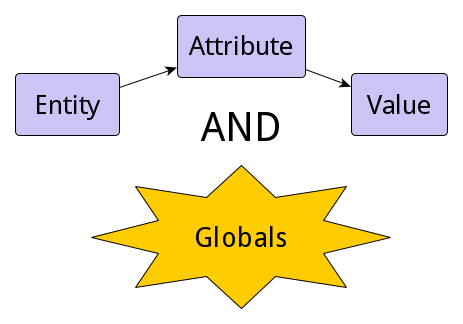
In the first article in this series, we’ll take a look at the entity–attribute–value (EAV) model in relational databases to see how it’s used and what it’s good for. Then we'll compare the EAV model concepts to globals.
Sometimes you have objects with an unknown number of fields, or perhaps hierarchically nested fields, for which, as a rule, you need to search.
Take, for example, an online store with diverse groups of products. Each product group has its own unique set of properties and has common properties as well.
I have a CSP page that throw a "414 error - Request-URI Too Long" when I put lot of text (eg : 10000 characters) into a field of a submitted form. The form is submitted using POST method.
Based on some experiments I made, it seems the max size of a URL is around 8200 characters.
What is the official limit, and is there a way to increase it ? I searched in the documentation but couldn't find anything.
I have been using the query below and it was working fine but now it's giving a SQL error. There were no changes made that could cause this to stop working. There is no Field 'APPLICATIONID' in the table.
QueueSQL=select distinct (convert(char(5),SkillsetID)+'='+Skillset) from iagentbySkillsetStat where ApplicationID > 10000 QueueMappingSQL=SELECT DISTINCT (convert(char(5),SkillsetID)+'='+Skillset), SkillsetID FROM iagentbySkillsetStat iagentbySkillsetStat WHERE (iagentbySkillsetStat.ApplicationID>10000)
DB- Intersystems Cache
Error details for the log files are below.
14/09/2016 11:20:05 a.m.
Note: there are more recent updates, see https://community.intersystems.com/post/updates-our-release-cadence
InterSystems is adopting a new approach to releasing InterSystems IRIS. This blog explains the new release model and what customers should expect to see. We laid this out at Global Summit at the end of the InterSystems IRIS roadmap session and have received a lot of positive feedback from customers.
With this new model we offer two release streams:
1) An annual traditional release that we call EM (for Extended Maintenance)
2) A quarterly release that is tagged CD (for Continuous Delivery) and will be available only in a container format.
What is the correct way to write embedded SQL that will use a Like operator and local variable. Ex How can a sql query return the IDs of all rows where LastName has the substring "Doe"?
Set nameToFind="Doe". The below does not work.
&sql(Select ID from myTable where LastName like '%:nameToFind%')
Simple enough but this syntax is tricky!!
Do you ever have the desire to optimize your code as much as possible?
Do you have any cases where every nanosecond matters?
Do you use If statements?
This quick tip can help your code run slightly faster with no additional code.
As you might have heard, we just introduced the InterSystems API Manager (IAM); a new feature of the InterSystems IRIS Data Platform™, enabling you to monitor, control and govern traffic to and from web-based APIs within your IT infrastructure. In case you missed it, here is the link to the announcement.
In this article, I will show you how to set up IAM and highlight some of the many capabilities IAM allows you to leverage.
A quick question. What's the shortcut to uncomment multiple lines of code in Studio? And what's the shortcut to comment out multiple lines of code in Studio?
Thanks in advance!
I'm trying to convert a CSV inbound to an HL7 MFN^M16 outbound. I know I'm using book information as the CSV but I don't think that matters. Please let me know if that's incorrect.
My service is reading the file in just fine and when I don't have a DLT transformer the raw message passes through to outbound file folder just fine. However, when I include a basic DLT that simply copies a couple of fields over I get the "Ens.StreamContainer" error. Everything also seems to be good in the Record Mapper.
I'm aware of two ways to get list of files in a dir:
set dir = "C:\temp\" set rs = ##class(%File).FileSetFunc(dir, , , 1) do rs.%Display()
and:
set dir = "C:\temp\"
set file=$ZSEARCH(dir_"*")
while file'="" {
write !,file
set file=$ZSEARCH("")
}Yet they bot return only files and directories in a current directory, but not files in subdirectories.
I suppose I call one of these recursively, but maybe there's a better solution?
Hoping someone can help.
I need to convert a timestamp from the following format (YYYYMMDDhhmmss e.g. 20160105125915) to UTC time in the same format.
I presume I need to convert it to the system format ( like $HOROLOG ) and then use something like ConvertTimeStampToHorolog or perhaps LocalWithZTIMEZONEtoUTC but not sure of the syntax.
Thanks,
In the last post we scheduled 24-hour collections of performance metrics using pButtons. In this post we are going to be looking at a few of the key metrics that are being collected and how they relate to the underlying system hardware. We will also start to explore the relationship between Caché (or any of the InterSystems Data Platforms) metrics and system metrics. And how you can use these metrics to understand the daily beat rate of your systems and diagnose performance problems.
Recently I started working with GitLab - GitHub self-hosted foss alternative. So far so good, liked the UI, ease of administration, and available functionality (I was on Phabricator previously, and still use it for repo mirroring).
GitLab has GitLab CI (GitLab Continuous Integration) which looks promising (pluggable docker/vm/ds to run code) , but I wondered if someone uses it already and can share scripts for it?
I am getting an ERROR #5002 in a soap service defined in ensemble. Odd thing is that I allready have a functioning business service running as a soap service, but we needed another, but that one returns an error:
<SOAP-ENV:Envelope xmlns:SOAP-ENV="http://schemas.xmlsoap.org/soap/envelope/" xmlns:xsi="http://www.w3.org/2001/XMLSchema-instance" xmlns:s="http://www.w3.Is it just set varName = 1 or is there an actual true/false value?
Hey Developers!
Join our next competition in creating open-source solutions using InterSystems IRIS Data Platform! Please welcome:
➡️ InterSystems IRIS AI Programming Contest ⬅️
Duration: June 29 – July 19, 2020.
Currently, when we want to write data to a file that will be viewed in Excel, we parse the data in tab deliminated format to the file and name it with .xls at the end. That is sent to end users via email. They get a warning that the data is not formatted properly (it's not really an Excel file after all) but it does display somewhat correctly as the tabs are understood (this does not work if we deliminated with commas however).
How can we format the file for Excel?
Hello,
There is a problem connecting clients through ODBC.
"ERROR [08S01] [Cache ODBC][State : 08S01][Native Code 459]
Connection via cconnect failed:
TCP connect() failed - exception satisfied select().
Reason: (10061, 0x274d) No connection could be made because the target machine actively refused it."
Error sometimes occurs. In cconsole.log there are only messages about high CPU usage.
ODBC and Cache version Cache for Windows (x86-64) 2013.1.4 (Build 801).
Any suggestions?
So this may sound trivial, but I'm seeing conflicting information on this topic and hoping to get clarification.
According to Enslib.HL7.Message class definition, the maxlength of RawContent is 10,000 characters. So when using encoding like UTF-8, that is 10KB. When using Unicode, that should then be 20KB.
But then also coming across some forums and documents where 32KB is maximum size before HL7 fields are truncated.
What is the sure way to determine and modify an interface's maximum supported message size?